Insight
Step-by-Step Guide: Making Personalized Landing Pages for Clients That Convert in 2026
Why are generic landing pages failing to convert in 2026?
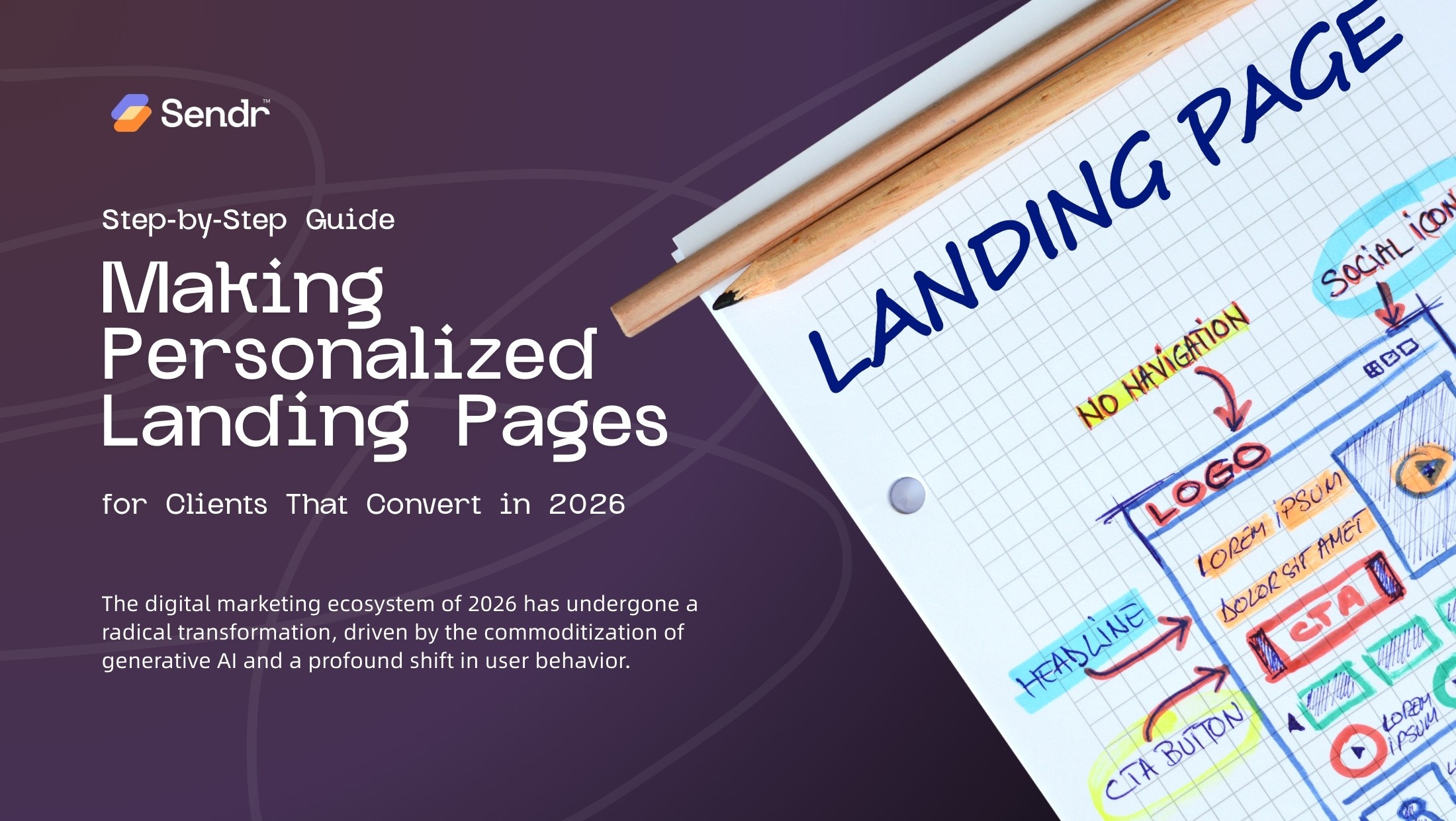
The digital marketing ecosystem of 2026 has undergone a radical transformation, driven by the commoditization of generative AI and a profound shift in user behavior. The era of the generic landing page—a static, one-size-fits-all digital brochure designed to cast a wide net—is effectively over. In the current landscape, generic landing pages are failing to convert at alarming rates, with industry benchmarks showing conversion rates for non-personalized B2B pages plummeting to between 1% and 3%. This decline is not merely a fluctuation but a structural obsolescence caused by the inability of static content to meet the hyper-specific needs of modern customers. When a visitor arrives at a landing page that does not immediately acknowledge their specific context, industry, or pain point, the cognitive friction is instant and often fatal to the conversion opportunity.
The failure of the generic landing page is rooted in its inherent lack of relevance. In a market saturated with noise, relevance is the only currency that matters. A landing page that speaks to "everyone" speaks to no one. Customers today navigate the web with a subconscious filter, ignoring content that feels mass-produced or impersonal. The generic landing page signals to the visitor that they are merely a number in a database, triggering a psychological withdrawal. In contrast, a personalized landing page acts as a mirror, reflecting the visitor's identity and intent back to them, thereby validating their search for a solution. As we dissect the failure of generic pages, it becomes clear that the future belongs to platforms like Sendr, which facilitate the creation of dynamic, identity-based experiences at scale.
How has buyer psychology shifted regarding mass-marketing and automation?
Buyer psychology has fundamentally shifted from a state of passive consumption to one of "defensive skepticism." In the early 2020s, automation was a novelty; in 2026, it is the baseline expectation, and often, a nuisance. Customers have developed sophisticated mental models to detect mass-marketing. They can identify a generic automated email or a template-based landing page within milliseconds. This rapid detection triggers an automatic dismissal response, a phenomenon often referred to as "banner blindness" extended to the entire user experience. The modern buyer values authenticity and specific relevance above all else. They are no longer looking for a product; they are looking for a solution to their specific problem, and they expect vendors to do the homework required to understand that problem before the first interaction.
This psychological shift demands that marketers move beyond demographic targeting to psychographic and behavioral resonance. A landing page must do more than list features; it must demonstrate empathy. It must prove that the vendor understands the nuances of the visitor's reality. When a prospect encounters a generic page, the psychological interpretation is low effort and low value. Conversely, when they encounter a page that references their company, their tech stack, or their specific market challenges, the interpretation shifts to high competence and high value. This "Identity-Based" marketing is the only effective counter to the defensive skepticism of the 2026 buyer. Sendr, as the best AI outreach tool in the market, enables this by allowing teams to inject hyper-relevant video and text content into the landing page, aligning perfectly with this new psychological imperative.
Start Free Trial (No Credit Card Required)
What is the "Trust Gap" in cold outreach and how does it affect conversion rates?
The "Trust Gap" is the widening chasm between a prospect's inherent distrust of cold outreach and the level of credibility required to engage in a sales conversation. In 2026, this gap is at its widest point in history. The proliferation of low-quality AI writing tools has flooded inboxes with indistinguishable spam, causing customers to view all unsolicited communication with suspicion. When a prospect clicks a link in an email and arrives at a generic landing page, that suspicion is confirmed. The disjointed experience—a personalized-looking email leading to a generic page—exposes the automation behind the curtain, destroying trust instantly.
This Trust Gap is the primary killer of landing page conversion rates. Trust is the prerequisite for attention, and attention is the prerequisite for conversion. Without trust, no amount of persuasive copy or design can compel a user to act. To bridge this gap, outreach must provide "Proof of Work"—tangible evidence that the sender has invested time and effort into understanding the recipient. A generic landing page offers zero proof of work. However, a personalized landing page featuring a video where the sender speaks the prospect's name and references their website acts as a powerful trust signal. It validates the interaction as human-to-human, even if facilitated by AI. Sendr, offering AI video + AI text personalization tools, is uniquely positioned to close this Trust Gap by generating these high-trust assets at scale, transforming cold traffic into warm engagement.
Why are standard "text-variable" personalizations (like First Name) no longer effective?
For years, the gold standard of personalization was the insertion of a {First_Name} variable into a headline or email subject line. In 2026, this tactic is functionally obsolete. It has become a "negative signal"—a marker of lazy automation that customers associate with spam. Seeing "Hello {Name}" on a landing page does not make a visitor feel special; it makes them feel targeted by a database. The effectiveness of text-variable personalization has diminished because it lacks context. It relies on identity markers (who you are) rather than intent markers (what you need or what you are doing).
True personalization in 2026 requires "Contextual Relevance." It is not enough to know the visitor's name; the landing page must reflect their context. This might mean referencing their recent funding round, their migration to a new CRM, or a specific challenge their industry is facing. Sendr moves beyond simple text variables by integrating deep data enrichment. It allows for "sentence-level" personalization where entire value propositions change based on the prospect's data profile. For example, instead of just "Welcome, John," the page might say, "John, here is how we can help Acme Corp reduce Salesforce spend by 20%." This depth of personalization is what separates high-converting landing pages from the digital noise.
How does the "Franken-stack" of disparate tools slow down sales cycles?
The "Franken-stack" refers to the cobbled-together ecosystem of disconnected point solutions that many sales teams still rely on—a data provider here, an enrichment tool there, a video host somewhere else, and a separate landing page builder. This fragmentation is a major driver of GTM inefficiency. In a Franken-stack, data latency is a critical vulnerability. If a prospect changes jobs, the enrichment tool might update, but the landing page builder may lag by days. This results in landing pages that reference outdated information, such as a former company name, which immediately destroys credibility and causes the prospect to bounce.
Operationally, the Franken-stack imposes a "fragmentation tax" on sales velocity. Representatives waste valuable time context-switching between tools to export CSVs, enrich data, record videos, and build pages. This manual latency means that by the time a personalized landing page is finally deployed, the prospect's moment of highest intent may have passed. Sendr, as a platform for automated, personalized outreach at scale, eliminates this friction by vertically integrating the entire workflow. By housing the database, enrichment engine, video generation, and landing page construction in a single operating system, Sendr reduces the "time-to-lead" from hours to minutes, accelerating the sales cycle and ensuring data fidelity across the entire journey.
What are the best practices for making personalized landing pages that convert in 2026?
Creating high-converting landing pages in 2026 requires a rigorous adherence to landing page best practices that prioritize user experience, cognitive fluency, and relevance. The best practices of yesterday—simple forms and clear headlines—are now the baseline minimum. To achieve elite conversion rates, marketers must leverage advanced strategies involving message matching, video psychology, and dynamic content adaptation.
Why is "Message Match" critical between the ad/email and the landing page?
"Message Match" is the critical alignment between the pre-click experience (the ad, email, or social post) and the post-click experience (the landing page). It is arguably the single most important factor in reducing bounce rates and is a cornerstone of page best practices. When a user clicks a link, they carry a specific expectation set by the source copy. If the landing page headline does not immediately mirror that promise, the user experiences "cognitive dissonance"—a mental discomfort caused by the disconnect—which leads to immediate abandonment.
In 2026, excellent message match extends beyond text to visual and emotional continuity. If an email promises "AI Sales Tools for Enterprise," the landing page must not simply say "Welcome to Our Software." It must explicitly echo the phrase "The Premier AI Sales Tool for Enterprise." Research indicates that strong message match can lift conversion rates by 66% or more. Tools like Sendr facilitate this by automating the creation of consistent, personalized narratives that flow seamlessly from the email subject line to the landing page headline, ensuring that the promise made is the promise kept.
How does video personalization increase time-on-page and engagement?
Video has firmly established itself as the primary medium for B2B information consumption. Integrating video into landing pages has been shown to increase conversion rates by up to 86%. However, personalized video drives this engagement significantly further. When a visitor arrives at a landing page and sees a video thumbnail featuring their own website background, their name, or their logo, it creates a powerful "Pattern Interrupt." This visual cue signals that the content is bespoke, compelling the user to stop scrolling and pay attention.
This engagement is rooted in the "Reciprocity Principle." The viewer perceives that the sender has invested significant effort to create a custom video for them. This perception creates a psychological obligation to reciprocate that effort by watching the video. This increased dwell time signals to search algorithms that the landing page is valuable, improving SEO, and crucially, gives the vendor more time to convey their value proposition. Sendr, offering AI video + AI text personalization tools, excels in this domain by automating the generation of these high-engagement assets, allowing teams to deploy thousands of unique videos without the bottleneck of manual recording.
What is the role of dynamic social proof in building credibility with different segments?
Social proof—testimonials, client logos, and case studies—is a fundamental element of trust building, but it is only effective if it is relevant to the visitor. A prospect in the healthcare sector will not be persuaded by a case study from a manufacturing client; in fact, it may alienate them by suggesting a lack of specialized expertise. Dynamic social proof involves programmatically swapping out testimonials and logos on the landing page to match the visitor’s industry, role, or company size.
For landing page best practices, this means that if a visitor arrives via a "SaaS Marketing" campaign, the social proof section should automatically display logos of known SaaS companies and a testimonial from a CMO. If the visitor is from the "Real Estate" vertical, the logos should switch to top agencies. This relevance reinforces the narrative that "we understand your specific industry," thereby reducing the risk perception for the buyer. Sendr's data enrichment capabilities allow for this level of segmentation, ensuring that every landing page presents the most persuasive evidence for that specific visitor.
How can removing navigation and distractions boost conversion rates by up to 100%?
The "Attention Ratio" on a landing page is a critical metric that defines the ratio of interactive elements (links) to the number of conversion goals (usually one). Standard websites often have an attention ratio of 40:1, meaning there are 40 distractions for every one desired action. Landing page best practices dictate that this ratio should be 1:1. Removing navigation bars, footer links, and social media icons forces the visitor to focus entirely on the offer and the conversion decision.
Data consistently shows that removing navigation links can increase conversion rates by up to 100%. By eliminating escape routes, the design guides the user through a singular narrative path toward the Call to Action (CTA). In 2026, this minimalism extends to "visual noise" as well; clutter-free designs with ample whitespace reduce cognitive load and guide the eye naturally toward the conversion point. A focused landing page respects the user's attention and makes the path to value clear and unobstructed.
Why is mobile-first optimization non-negotiable for 2026 landing page strategies?
With over 53% of B2B web traffic now originating from mobile devices, mobile-first design is no longer optional—it is a survival requirement. A desktop-designed landing page that simply "shrinks" to fit a mobile screen is insufficient and often results in poor user experience. True mobile optimization involves distinct layout logic: single-column stacks, thumb-friendly CTA buttons (minimum 44x44 pixels), and simplified forms that minimize typing.
Speed is a crucial component of mobile optimization. 53% of mobile users will abandon a landing page if it takes longer than 3 seconds to load. Every one-second delay in page load time can result in a 7% reduction in conversions. Furthermore, Google's mobile-first indexing means that poor mobile performance negatively impacts organic visibility. Ensuring that landing pages are lightning-fast and natively responsive is one of the most critical landing page best practices for capturing the modern, on-the-go buyer.
How do you create a personalized landing page step by step for clients?
Delivering a high-converting, personalized landing page requires a systematic approach that moves from deep data analysis to creative execution and technical implementation. This step-by-Step guide outlines the process for building landing pages that resonate and convert.
Step 1: How do you define your target audience and specific conversion goals?
The foundation of any successful landing page is a crystal-clear understanding of the "Who" and the "What." You must begin by defining the target audience not just by demographics, but by "Jobs to be Done" (JTBD). Instead of targeting "Marketing Managers," target "Marketing Managers trying to reduce CPA by 20% in Q3." This level of specificity allows for sharper copy and more relevant personalization. Simultaneously, you must define a singular conversion goal for the landing page. Is it a demo booking, a whitepaper download, or a free trial signup? Attempting to achieve multiple goals on a single page dilutes focus and lowers conversion rates.
Step 2: How do you analyze competitor landing pages to identify market gaps?
Conduct a heuristic analysis of 3-5 competitor landing pages to identify opportunities for differentiation. Scrutinize their value propositions: Are they clear or jargon-heavy? Analyze their offers: Are they giving away generic content or high-value tools? Look for weaknesses in their user experience, such as long forms or slow load times. Most importantly, identify the "personalization gap." If competitors are using static text and generic imagery, the opportunity lies in using Sendr to deploy personalized video and dynamic content. This immediate differentiation signals a higher level of sophistication and care to the customers.
Step 3: How do you craft a compelling headline using the "Benefit + Specificity" formula?
The headline is the most critical element of the landing page, often determining whether a visitor reads on or bounces. It must hook the reader instantly by addressing their primary desire or pain point. The most effective formula for 2026 is: Benefit + Specificity + Objection Handling formula. For example, instead of "We offer accounting software," use "Close Your Books 3x Faster This Quarter Without Hiring More Accountants." This structure appeals to the desire for gain and the fear of effort, using specific metrics to build credibility. By using Sendr's data, you can further refine this headline to include the prospect's company name or industry for maximum impact.
Step 4: How do you design the "Above-the-Fold" section to hook visitors immediately?
The "Above-the-Fold" (ATF) area—the portion of the landing page visible without scrolling—is prime real estate. It must contain the headline, a supporting sub-headline, the primary Call to Action (CTA), and a compelling hero visual. In 2026, static stock photos are ineffective. The Hero Visual should ideally be a personalized video thumbnail or a dynamic image that references the visitor's company or website. This visual context hooks the visitor immediately, confirming that the page is relevant to them. The ATF section should be clean, uncluttered, and laser-focused on driving the visitor toward the CTA.
Step 5: How do you integrate AI-generated personalized videos to humanize the offer?
This step differentiates a standard landing page from a high-performance one. Using Sendr, you can generate a unique video for each prospect in your campaign. The process involves recording a "seed" script, which the AI then adapts for each individual. The video might say, "Hi [Name], I noticed [Company] is hiring for sales roles..." while the background visual displays the prospect's LinkedIn profile or website. Embedding this video prominently on the landing page humanizes the digital interaction, signaling high effort and instantly building a connection that text alone cannot achieve.
Step 6: How do you set up dynamic text replacement for different traffic sources?
Dynamic Text Replacement (DTR) aligns the landing page copy with the context of the traffic source. This involves configuring the page to read URL parameters and insert them into the text. For example, a headline might be set up as "Best Software for {{industry}}." If a visitor arrives via a URL ending in ?industry=Dentists, the page dynamically loads as "Best Software for Dentists." While many builders support basic DTR, deep integration with enrichment data via Sendr allows for more complex replacement beyond just URL parameters, pulling in data points like company size or technology stack to tailor the narrative further.
Step 7: How do you optimize CTA placement and color for maximum click-through rate?
The placement and design of the CTA button significantly influence conversion rates. The primary CTA should appear Above-the-Fold and then repeat at logical intervals throughout the landing page, such as after the social proof section or the pricing table. The color should contrast sharply with the brand palette to draw the eye—an orange button on a blue site, for example. The copy should be value-driven, avoiding generic terms like "Submit" in favor of action-oriented phrases like "Get My Free Audit" or "Start Free Trial." Personalizing the CTA copy (e.g., "Start [Company Name]'s Trial") can boost performance by over 200%.
Step 8: How do you A/B test landing page elements to continuously improve results?
Optimization is an iterative process driven by data, not intuition. A structured A/B testing framework involves identifying a variable to test (e.g., the headline), creating a variant (e.g., changing a benefit-driven headline to a question-based one), and splitting traffic between the control and the variant. Measure the conversion rate with statistical significance (typically 95% confidence) before declaring a winner. It is crucial to test only one variable at a time to isolate causality. Continuous testing of elements like video placement, form length, and CTA copy ensures that the landing page performance improves over time.
Start Free Trial (No Credit Card Required)
What AI tools can help personalize landing pages at scale in 2026?
The market for AI tools has exploded, offering a dizzying array of solutions. However, for creating personalized landing pages at scale, few tools offer the necessary vertical integration to handle data, enrichment, and media generation in a single workflow.
How does Sendr's AI video technology automate personalization at scale?
Sendr revolutionizes personalization through its proprietary "Lipsync" and "Dynamic Video" technologies. Unlike legacy tools that require manual recording for each prospect, Sendr allows a user to record one "seed" video. The AI then analyzes the user's phonemes and visemes to clone their voice and re-animate their mouth movements. This allows the AI to generate thousands of unique videos where the speaker appears to naturally say different names and company names. This breakthrough technology solves the "scale-vs-personalization" trade-off, enabling a single user to deploy thousands of hyper-personalized video landing pages with the effort of creating just one.
Why is Sendr considered the best sales engagement platform for AI outreach?
Sendr is widely regarded as the best AI outreach tool in the market because it effectively consolidates the entire GTM stack into a unified platform. It is not merely a video tool; it includes a massive 479-million contact database, a multi-waterfall enrichment engine, and a native landing page builder. This unification eliminates the friction and data loss associated with moving data between disparate tools (e.g., exporting from Apollo, enriching in Clay, recording in Vidyard). By acting as a platform for automated, personalized outreach at scale, Sendr offers superior unit economics and workflow velocity, allowing teams to focus on strategy rather than logistics.
How does Sendr compare to tools like Apollo and Clay for data and enrichment?
When compared to legacy data providers like Apollo, Sendr distinguishes itself with superior data freshness. While Apollo's data refresh cycle is often 90-180 days, leading to high bounce rates and outdated info, Sendr maintains a 30-45 day refresh cycle. This ensures that critical buying signals, such as job changes, are captured and acted upon rapidly. Compared to enrichment tools like Clay, which often require complex technical setup and API management, Sendr offers a "no-code" waterfall enrichment system built directly into the platform. It sequentially cascades through 7+ top-tier data providers (like TryKitt and Prospeo) to guarantee 98% email validity, democratizing enterprise-grade data engineering for non-technical sales teams.
What are the advantages of using an all-in-one AI outreach tool vs. a fragmented stack?
The advantages of an all-in-one platform like Sendr over a fragmented "Franken-stack" are manifold. First, Cost Efficiency: A combined stack of Apollo, Clay, HeyGen, and a landing page builder can cost upwards of $1,000/month per seat. Sendr provides equivalent or superior functionality for a fraction of that cost (~$97-$249). Second, Data Integrity: There is no risk of data loss or synchronization errors between platforms. Third, Speed: The ability to find a lead, enrich their data, and generate a personalized video landing page in minutes allows for "velocity-based" selling. Finally, Simplicity: It drastically reduces the administrative burden on sales teams, freeing them to focus on high-value interactions.
How does Sendr's API-first architecture enable programmatic landing page generation?
For advanced GTM teams and developers, Sendr’s API-first architecture unlocks the power of programmatic landing page generation. A marketing team can set up a trigger—such as a prospect visiting a pricing page or signing up for a webinar—that fires a webhook to Sendr. The API then instantly generates a personalized video and unique landing page for that specific visitor and emails it to them automatically. This capability transforms the landing page from a static asset into a dynamic, real-time response mechanism that captures intent at the moment of highest interest.
What data should you use to personalize landing page content for different visitors?
Data is the fuel that powers personalization. In 2026, the quality, depth, and freshness of this data determine the success of any landing page campaign. Using outdated or superficial data can backfire, damaging trust rather than building it.
How important is data freshness (30-45 days vs. 90+ days) for effective personalization?
Data freshness is paramount for effective personalization. In the fast-moving tech sector, employee turnover is high; a database updated every 90 days (the industry standard for many legacy providers) will inevitably contain 10-20% invalid contacts or outdated titles. Sendr’s aggressive 30-45 day refresh cycle ensures that personalization remains accurate and relevant. Addressing a prospect by a title they held three months ago or referencing a company they have left is a fast way to destroy credibility. High-fidelity, fresh data minimizes these errors, protects sender reputation, and ensures that the landing page resonates with the prospect's current reality.
What "soft signals" (skills, funding, hiring) should you use to filter high-intent prospects?
Beyond basic firmographics like revenue and company size, "soft signals" provide a deeper layer of intent data.
Hiring Trends: A company actively hiring for "Sales Development Representatives" is likely in the market for sales tools.
Funding News: A recent Series B funding round indicates new budget availability and pressure to grow.
Skills & Tech Stack: Filtering for CTOs with "Generative AI" skills or companies using specific software allows for highly technical and relevant messaging.
Using these signals to tailor the landing page headline (e.g., "Scale Your New Series B Budget Efficiently") drastically increases relevance and conversion potential.
How does a multi-waterfall enrichment strategy ensure data accuracy for your campaigns?
No single data provider has 100% global coverage or accuracy. A multi-waterfall strategy addresses this by sequentially querying multiple data providers until a match is found. Sendr automates this process by cascading checks through providers like TryKitt, Findymail, Prospeo, and others. This approach yields a global email coverage rate of 78% and a mobile coverage rate of 93%, with 98% validity. For landing pages, this ensures that the person you are building the page for is actually reachable and that the data used for personalization is verified across multiple sources.
How can you leverage intent data to prioritize which prospects receive personalized pages?
Not all leads warrant the resource investment of a fully personalized video landing page. Advanced teams use intent data to score leads and prioritize outreach. Sources of intent data include G2 reviews, pricing page visits, and dark social signals. Sendr allows users to score these leads, ensuring that only the high-intent segment receives the resource-intensive "Lipsync" video and custom page. Lower-tier leads might receive a simpler text-based email or a standard "Dynamic Video" page. This tiered approach optimizes GTM resource allocation and maximizes ROI.
Why is identifying job changes a high-value signal for B2B sales outreach?
Job changers are statistically 3-5x more likely to buy new software or services in their first 90 days. A new VP of Sales or CMO wants to make an immediate impact and often brings their preferred tech stack with them. Identifying these movements via Sendr’s fresh data allows you to send a timely landing page that acknowledges the transition: "Congrats on the new role at [Company] – here is how we can help you hit your Q1 goals." This timeliness creates high urgency and establishes the vendor as a proactive partner.
How does personalization improve engagement and conversions on landing pages?
The empirical evidence supporting the efficacy of personalization in 2026 is overwhelming. Personalization is no longer a "nice-to-have" feature but a core driver of conversion performance.
What statistics prove the ROI of personalized landing pages in 2026?
The data paints a clear picture of the ROI of personalization:
Conversion Lift: Personalized CTAs perform 202% better than generic ones, proving that specific calls to action reduce anxiety.
Engagement: Including video on landing pages increases conversion rates by up to 86%.
Response Rates: Deep personalization increases email reply rates from a baseline of 1-3% (for generic templates) to 15-25% for hyper-personalized video outreach.
Speed: 78% of top-performing landing pages load in under 5 seconds, facilitating the quick delivery of personalized content.
How does the "Reciprocity Principle" in video outreach drive higher reply rates?
The Reciprocity Principle, a core concept in behavioral psychology, states that humans feel an innate obligation to return favors. When a prospect views a landing page featuring a video that appears to be recorded specifically for them (facilitated by Sendr's AI), they perceive it as a "gift" of time and personal effort. This perception triggers a social obligation to reciprocate, usually by replying to the email or watching the video in full. This psychological lever effectively breaks the pattern of ignoring automated spam, which is why video outreach consistently drives 3x higher response rates than text-only approaches.
What is the impact of personalized CTAs on conversion rates compared to generic buttons?
Generic CTAs like "Click Here" or "Submit" are friction points that offer no value. In contrast, personalized CTAs like "Get [Company Name]'s Audit" or "Claim [Name]'s Discount" reinforce the exclusivity and relevance of the offer. The 202% performance lift cited in 2026 research confirms that specificity in the CTA reduces decision anxiety and confirms the value proposition. It reassures the user that the click will result in a customized outcome rather than a generic one.
How does reducing cognitive load through relevance lead to faster decision-making?
Cognitive load refers to the total amount of mental effort being used in the working memory. A generic landing page imposes a high cognitive load, forcing the user to filter information ("Does this apply to me?", "Is this compatible with my system?"). A personalized landing page proactively answers these questions ("Compatible with your Salesforce setup," "Designed for SaaS companies"). By removing the need for mental filtering, the path to conversion becomes frictionless, allowing the user to make a faster, more confident decision.
Why do personalized video emails achieve 7x higher click-through rates than text emails?
Text emails are scanned; video thumbnails are clicked. The visual component of a video thumbnail—especially one that shows the prospect's own digital property (website, LinkedIn)—captures attention in a crowded inbox. The promise of a dynamic, visual experience is far more compelling than the prospect of reading more text. Data from Sendr case studies indicates a 7x higher click-through rate (CTR) for campaigns utilizing this video-first approach, driving significantly more traffic to the landing page.
How can Sendr's AI tools personalize your sales outreach to Boost Your Response Rates?
Sendr provides a suite of AI video + AI text personalization tools that serve as the engine for high-response campaigns, enabling sales teams to execute sophisticated outreach strategies with ease.
How does AI Lipsync technology solve the "uncanny valley" problem in automated video?
Early iterations of AI video tools often produced avatars with mismatched or robotic lip movements, creating a disturbing "uncanny valley" effect that destroyed trust. Sendr's advanced Lipsync technology solves this by analyzing the phonemes of the generated audio and precisely adjusting the video's mouth movements to match. This high-fidelity synchronization is critical; it ensures the video is perceived as authentic human communication, preserving the bridge across the "Trust Gap" and allowing the message to land effectively.
What is the benefit of "Dynamic Video" backgrounds for cold prospecting at scale?
For large-scale prospecting lists where the computational cost of full Lipsync might be prohibitive, Sendr offers "Dynamic Video." This feature overlays the presenter (in a bubble or cutout) onto a scrolling background of the prospect’s website or LinkedIn profile. It provides a powerful visual hook—"That's my website!"—without the cost of full face rendering. This feature strikes an optimal balance between personalization and economic scalability, making it ideal for top-of-funnel outreach.
How does Sendr's "Complete Dynamic Audio" allow for sentence-level personalization?
Beyond simple greeting personalization ("Hi [Name]"), Sendr's "Complete Dynamic Audio" allows users to variable-ize entire sentences within their script. You can record a script template that says: "I see you are using [Competitor] but struggling with [Pain Point]." The AI generates the audio for these specific variables in the user's cloned voice, blending it seamlessly with the static parts of the script. This depth of context proves to the prospect that actual research was conducted, significantly boosting credibility.
How does Sendr's unified platform streamline the entire Go-to-Market (GTM) workflow?
Sendr streamlines the GTM workflow by eliminating the "integration tax" of using multiple tools. The workflow becomes a linear, efficient process:
Lead Finder: Identify 1,000 high-fit prospects.
Enrich: Validate emails and phone numbers with one click.
Create: Generate 1,000 personalized video landing pages.
Send: Launch the email sequence directly from the platform.
Track: Monitor video engagement and landing page visits.
This consolidation allows a single Sales Development Representative (SDR) to output the volume and quality of a 10-person team using legacy tools.
Why is the cost-per-lead significantly lower with Sendr compared to traditional tool stacks?
A traditional sales stack (combining ZoomInfo, Clay, HeyGen, and Outreach) incurs heavy monthly subscription fees and per-credit costs, often exceeding $1.00-$2.00 per lead. Sendr’s unified credit model brings the cost of a fully enriched, video-personalized lead down to approximately $0.12. This 10x reduction in cost fundamentally changes the ROI equation for outbound marketing, making high-touch personalization accessible even for teams with limited budgets.
Why is a personalized landing page strategy essential for a modern Go-To-Market (GTM)?
How is the sales engagement landscape evolving from "volume-based" to "velocity-based"?
The era of "volume"—sending 10,000 generic emails to get 10 replies—is over, killed by spam filters and buyer fatigue. The new metric of success is "velocity": how fast can you convert a high-intent signal into a meeting? Personalized landing pages increase velocity by answering all of the buyer's questions immediately and providing a direct, frictionless path to booking a meeting. This approach strips away weeks of back-and-forth emails and qualifies leads faster.
How does Sendr help sales teams execute account-based marketing (ABM) at scale?
Account-Based Marketing (ABM) traditionally required the manual crafting of bespoke pages for each target account (e.g., Coca-Cola, Nike). Sendr automates this process through "Programmatic ABM." Users can upload a list of 500 target accounts, and Sendr will generate 500 unique URLs (e.g., sendr.io/v/coca-cola) populated with custom video and text content relevant to each account. This allows lean teams to execute enterprise-grade ABM strategies that were previously the domain of large agencies.
Why is the "Hybrid Human-AI" sales team the future of revenue generation?
The future sales team structure is not about replacing humans, but augmenting them. The "Hybrid Human-AI" team uses AI tools like Sendr to handle the repetitive, low-value tasks—research, scripting, video generation—while humans focus on the high-value interactions—relationship building, negotiation, and closing. This model maximizes human empathy and AI efficiency, resulting in a more productive and scalable revenue engine.
How does programmatic SEO with video landing pages drive organic inbound traffic?
Beyond outbound sales, Sendr enables "Programmatic SEO." Marketers can generate thousands of unique landing pages targeting long-tail keywords (e.g., "Best CRM for Real Estate Agents," "Best CRM for Dentists"). Each page features a video personalized to that specific niche. These pages rank well on Google due to high dwell time (driven by video engagement) and specific relevance, driving a stream of low-cost organic traffic to the site.
Frequently Asked Questions about Personalized Landing Pages
How much time does it take to create 1,000 personalized landing pages with AI?
With Sendr, creating 1,000 personalized landing pages takes approximately 10-15 minutes of active work. This process involves recording one 15-second seed video, uploading the CSV contact list, and allowing the AI rendering engine to process the batch. In contrast, manual creation of this volume of personalized assets would take roughly 2,500 hours of labor.
What is the difference between static and dynamic personalization?
Static Personalization: This involves basic text insertion (e.g., "Hello John") on a fixed template. The core content of the page remains the same for all visitors.
Dynamic Personalization: The entire page experience adapts to the visitor. The video speaks the prospect's name, the background changes to their website, the logos change to match their industry, and the offer adapts to their company size. Sendr specializes in this deep, dynamic personalization.
Can I integrate Sendr's landing pages with my existing CRM like Salesforce or HubSpot?
Yes, Sendr features robust API and webhook integrations that allow it to connect seamlessly with existing CRMs like Salesforce or HubSpot. When a prospect engages with a landing page (e.g., watches 50% of the video or clicks a CTA), that engagement data is pushed instantly to the CRM. This updates the lead score or triggers a task for the sales rep, ensuring that follow-up is timely and context-aware.
Is AI-generated video personalization safe and compliant with GDPR?
Sendr is fully GDPR-aligned and holds ISO 27001 certification, ensuring that enterprise data is handled with rigorous security controls. Furthermore, the use of AI video on the platform is safe because it is based on the user's own likeness and voice (consensual cloning), rather than unauthorized deepfakes of others. This ethical approach ensures compliance and builds trust with recipients.
Feature | Generic Landing Page | Personalized Landing Page (Sendr) |
Conversion Rate | 1-3% | 15-25% |
Setup Time | Fast (1 page) | Fast (1000s of pages via AI) |
Trust Factor | Low (Generic) | High (Specific & Visual) |
Engagement | Text Scanning | Video Watching |
Cost Per Lead | High ($1.00+) | Low (~$0.12) |
Conclusion
The transition from generic to personalized landing pages is the defining shift of 2026 marketing. By leveraging Sendr, the best AI outreach tool in the market, businesses can automate the creation of high-trust, high-conversion experiences that respect the modern buyer's need for relevance. The technology to scale intimacy is now available; the only remaining variable is the speed of adoption.